
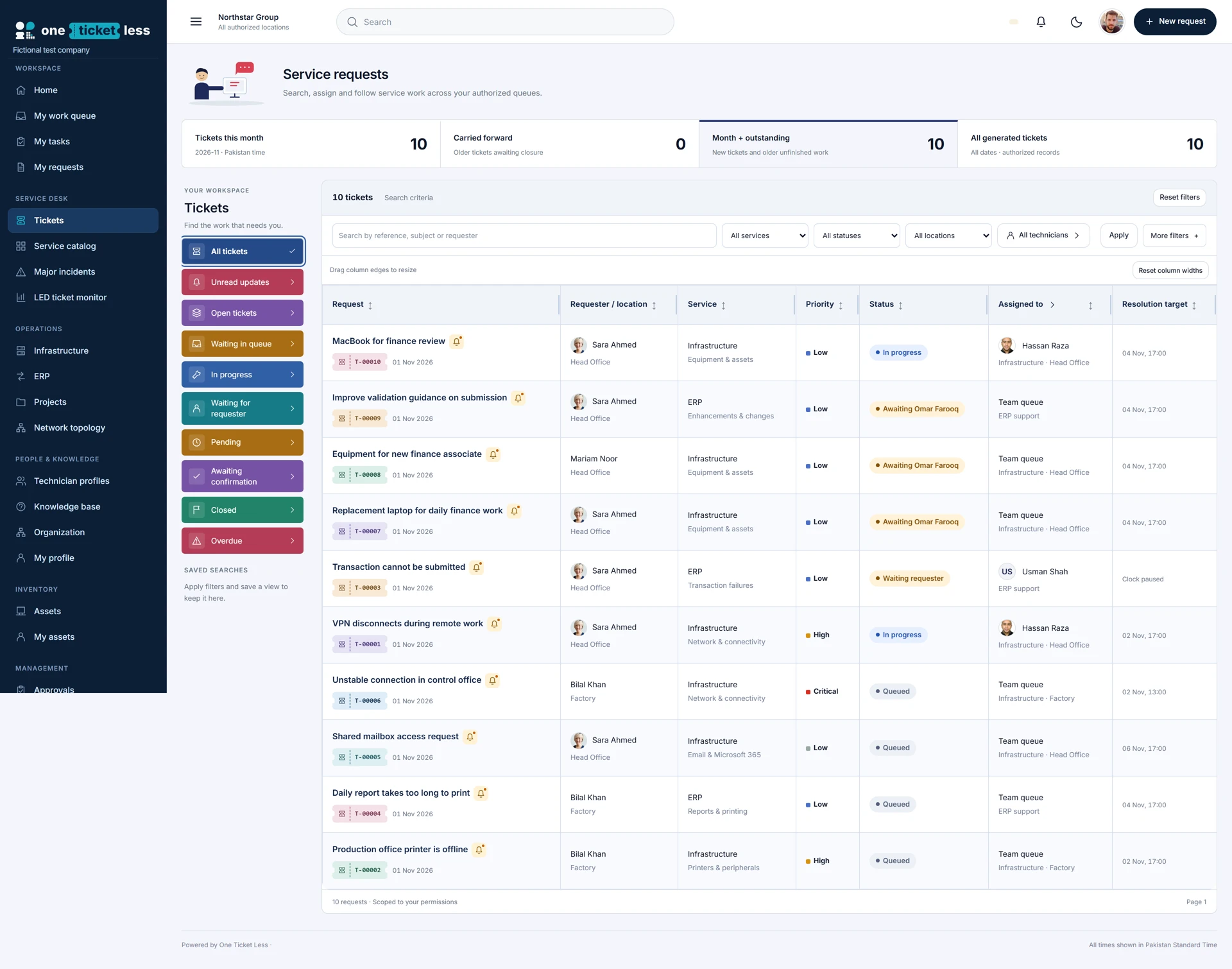
A request should have an owner and a next step
One Ticket Less brings the requester, assigned technician, status, target and conversation into the same ticket. Employees can follow their requests while service teams filter the work they are authorized to handle. Approval information identifies whose decision is needed rather than leaving everyone to interpret a generic pending label.
From a problem report to recorded resolution
An employee selects a configured service and completes its request form. The policy determines whether approval is required. The team receives the work, the technician investigates, and follow-ups stay with the request. Resolution and employee confirmation are recorded as distinct steps where the configured process requires them.
Conversations retain the context
Record useful investigation notes, updates and attachments in the ticket. Collaborators can follow the work without losing earlier decisions. Read receipts indicate recorded viewing activity; they are not approval or confirmation that the issue has been solved.
Review deadlines and accountability
Configure service targets and working calendars. Review overdue or unassigned requests and inspect the responsible stage before escalating. Technician performance and service reports help explain the work behind the numbers rather than relying on ticket counts alone.
A practical evaluation
Bring a real policy to a walkthrough: one normal request, one exception and one escalation. Review what employees see, what the approver can decide and how the technician completes the request. Check the available fields, permissions and reports before rolling the policy out to the whole company.